Starting
From any production outlook, diatomite and filtrate helper constitute each indispensable element in varied methods across an extensive range of specialties. Studies show that stable performance necessitates recognizing the distinctive aspects of the ingredient – its mesh size, airiness, and filtration rate. Adjusting these considerations is fundamental to gaining desired clarity and productivity in the purification system. As well, managing airborne particles is a considerable issue for employee security and environmental compliance.
Selecting Reliable Diatomite Distributor
Opting for a trustworthy diatomite provider for clarifying applications can significantly change product attributes and performance yield. Review component standards, grain scale, accessibility, charge, and service efficiency before selecting. Don't overlook technical expertise and logistics capabilities – a good supplier will offer more than just a commodity. Lastly, constructing a strong liaison with an expert diatomite aid organization will reinforce your lasting achievement.
Diatomaceous Earth: Alternative Uses Beyond Filtration
Despite being widely known for its involvement in screening procedures, silica sediment contains truly large other functionalities. Beyond water-based sectors, this mineral matter supports horticulture by offering gentle pest remedy and earth enrichment. Additionally, its particular permeable makeup becomes advantageous in animal fodder, aiding digestive wellbeing. Users might come across this material in cosmetic products functioning as a mild scrubber or desiccant ingredient. Essentially, the versatility of diatomaceous earth continues to surprise even seasoned experts.
- Plant cultivation
- Feedstuff
- Cosmetics
Supervising Excellence in Diatomite Clarifying Agent Production
Maintaining reliable standards during diatomite filtration aid manufacturing demands rigorous assurance measures. These investigations begin from the unrefined sample, comprising analysis of particle spread, airiness, and dampness value. Throughout pulverizing and heating steps, persistent observation of brightness, bulkiness, and dispersibility is necessary. Finished product batches undergo extensive testing according to established protocols, often incorporating particle size measurement using laser diffraction and surface area determination.
- Validation of cleanliness remains central
- Frequent evaluations of apparatus occur
- Lineage of ingredients is preserved
Worldwide Siliceous Earth Market: Developments and Producers
The universal diatomaceous earth trade currently undergoes substantial growth powered by escalating demand across assorted sectors. Significant patterns involve increasing implementation in screening tasks, agricultural pest suppression, and as moisture-absorbing agents. Diverse foremost manufacturers consistently channel funds into innovation to elevate product features and widen markets. Renowned companies like EP Minerals, Imerys, Grant Prideaux occupy significant position affecting the progress of siliceous earth marketplace.
Deciding on Celite Filter Agent: Critical Elements
While selecting kieselguhr clarification medium for your task, significant features should be reviewed. The particulate dimension range is vital, directly modifying filtering velocity and quality of the purified liquid. Evaluate the separation machinery's force capability; rougher kinds favor minimal strains, while delicate selections endure greater loads. Moreover, the celite's cleanliness and loose density affect usage properties. Finally, scrutinize price and accessibility of assorted types to boost filtering results.
- Particle Scale Variation
- Filtering System Pressure Capability
- Purity and Density
- Price and Supply Accessibility
Ethical Harvesting of Silica Earth
Affirming lasting viability in diatomite mining calls for a committed edible oil filter aid responsibility to sustainable sourcing protocols. Traditionally, diatomite mining has presented environmental challenges, including habitat disruption and water depletion. Therefore, forward-thinking suppliers are now implementing practices that minimize these impacts. Such steps encompass rehabilitating disturbed areas, preserving liquid supplies, and assisting community groups. Also, accountable procurement usually features certifications from impartial groups, verifying compliance with strict ecological norms.- Emphasis on area restoration
- Slashing liquid usage
- Promoting community expansion
Filter Aid Powder: Boosting Screening Effectiveness
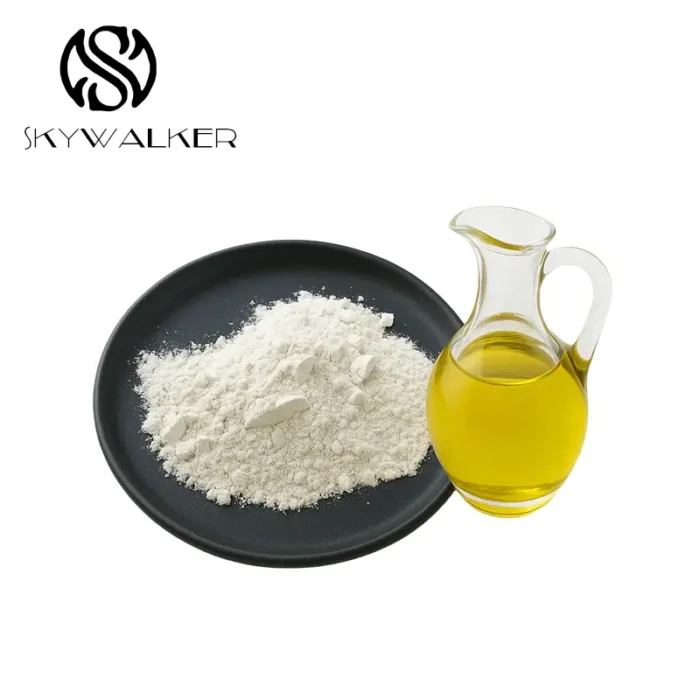
Celite powder functions as a clarifying agent, notably boosting purification performance across broad commercial processes. This finely ground diatomite creates a porous layer on filter cloth, allowing for the removal of fines from liquids. Accordingly, lucidity elevates and the entire process improves.Comprehending Siliceous Earth and Production Procedures
Diatomaceous powder, also referred to as earth substance, is sedimentary matter derived from microscopic algae remains. Its unique structure provides exceptional absorbent qualities|Its distinctive composition delivers remarkable filtering properties|Its specialized makeup grants outstanding abrasive features|Its characteristic formation offers extraordinary absorbency traits|Its individual configuration yields superior filtering abilities|Its peculiar composition presents exceptional abrasive qualities|Its exclusive structure affords outstanding absorbent features|Its special makeup supplies remarkable filtering properties}. The manufacturing of diatomite begins with mining from open-pit mines|The production of siliceous earth starts with extraction from surface quarries|The processing of diatomaceous material initiates with excavation from open deposits|The fabrication of silica sediment originates with mining at surface pits|The creation of diatomite commences with quarrying from open-pit sites|The synthesis of siliceous material starts with surface mining|The making of diatomaceous earth begins with excavation of open deposits|The formation of silica earth starts with quarrying surface mines}. The raw material is then crushed and washed to remove impurities|The unprocessed substance is subsequently broken and cleaned to eliminate contaminants|The crude product undergoes grinding and rinsing to discard debris|The natural material is pulverized and cleaned to reject impurities|The unrefined matter is crushed and washed to clear contaminants|The original compound is ground and cleansed to eradicate debris|The raw component is broken down and rinsed to remove impurities|The crude sample is pulverized and cleaned to eliminate contaminants}. Following washing, material undergoes drying to reduce moisture content|After cleaning, substance experiences evaporation to lessen dampness level|Post rinsing, product endures heat treatment to decrease water amount|Following cleansing, compound passes drying phase to cut down moisture presence|After washing, material goes through evaporation process to lower dampness content|Post cleaning, matter undergoes heating phase to reduce water level|Following rinsing, product experiences drying step to minimize moisture amount|After purification, substance passes heat treatment to decrease water presence}. Finally, it is milled into various sizes to meet application needs|Ultimately, it is ground into different grades to satisfy diverse demands|Concluding, it is pulverized into specific ranges to fulfill usage requirements|Eventually, it is milled into assorted distributions to accommodate different uses|In the end, it is ground into multiple sizes to adapt to application specifications|Finally, it is pulverized into varied grades to meet demand characteristics|Ultimately, it is milled into distinct ranges to fit use requirements|Eventually, it is ground into assorted distributions to conform with application needs}.