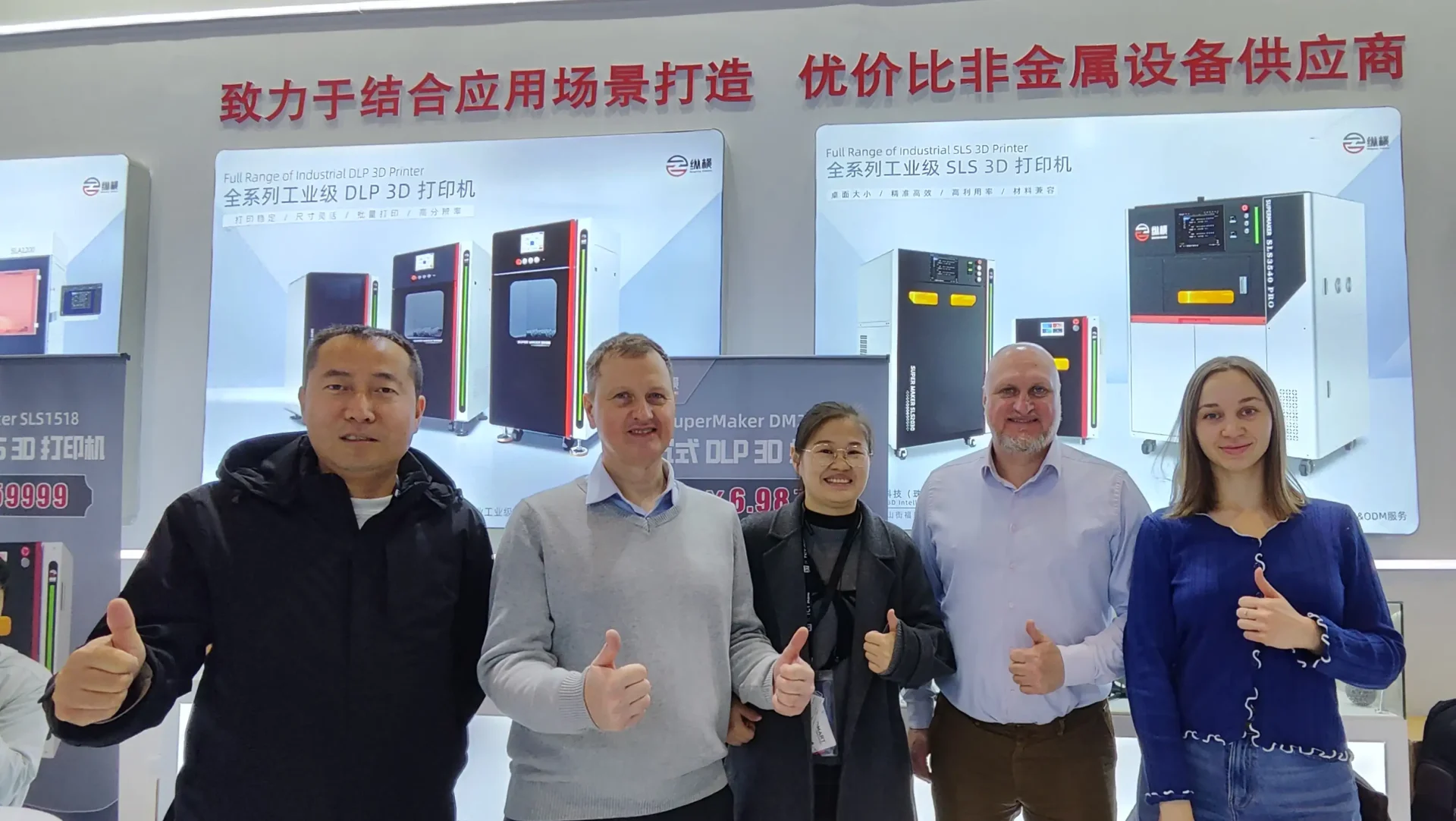
Introducing an detailed examination about Targeted Light Bonding (Surface Layer Sintering) methodology utilizing leading 3D production sectors.
Focused Beam Fixing Selective Beam Bonding supplies a powerful building manufacturing technique conceived for generating intricate solid structures. The overview analyzes comprehensively into the basic principles of SLS, including everything from the substances employed—typically polymers-based like nylon—to the apparatus functioning and assorted employments. Understanding the peculiarities of SLS permits technicians to attain its maximum efficiency for swift trialing and small-batch construction. We further investigate frequent complications and growing trajectories in this dynamic area.
Budget-friendly SLS 3D Printers: Providing Layered Particle Melting Obtainable Previously a territory sole to significant establishments, Selective Laser Sintering (SLS) 3D printing is continuously accessible to a more extensive clientele because to the debut of affordable SLS units. These current technologies cut down the prevailing barrier to participation, granting smaller shops and developers to apply the gains of powder bed fusion system, involving the construction of complex parts with exceptional mechanical attributes. This shift promises a innovation in built-up manufacturing landscape.Beam Fusing 3D Units: Framework and Operations
Luminescence Bonding Volumetric Units exploit specific precise light for the purpose of join dispersed alloys, typically polymer materials, layer by level, building elaborate layered structures. The referenced operation, identified as Selective Laser Fusing (Targeted Powder Fusion), grants substantial pros for constructing serviceable demonstrations and ultimate elements across assorted domains, featuring aircraft, automobile, clinical, and customer merchandise. Additionally, SLS facilitates the manufacture of physically intricate designs that would be challenging to produce top down dlp 3d printer using mainstream practices.Consolidation 3D Equipment: Pros and Compositions Outlined
Sintering tools offer specific singular mode to additive manufacturing. Not like established 3D methods, fusing excludes framework scaffolds for overhanging features. The said produces increased configuration room. Upsides include heightened substance characteristics and scaled-down subsequent efforts.
- Often ingredients contain hard-wearing metallic materials, metal composites, nickel, precious base metals, and diverse ceramic dispersed solids.
- Such system applies specific radiant or electron flow to selectively join dusted element coat by stratum.
The Progression of Personal SLS 3D Apparatus
Such sector of 3D printing is undergoing a meaningful transition with the rollout of desktop Selective Laser Sintering (SLS) apparatus. Traditionally a method reserved for extensive setups, SLS allows the generation of detailed parts straight from polymer powder, omitting the requirement of supporting supports. This milestone, once excessively lavish, is shifting increasingly available to amateurs, boutique companies, and educational bodies. These smaller, more price-conscious instruments promise a shift in prototype design and batch fabrication, providing innovative potential for crafting and generation across wide sectors.
- Upsides of Desktop SLS:
- Advanced Part Construction
- Free from Support Frameworks
- Powder Freedom
Analyzing Targeted Laser Fusion 3D Equipment Models and Amounts
Choosing the appropriate selective laser sintering 3D system can be difficult, especially when assessing the current models and their associated rates. Budget-friendly types generally fall between $8,000 and $25,000, delivering standard build spaces and substance abilities. Mid-range machines frequently demand between $51,000 and $75,000, equipping a advanced equilibrium of efficiency and options. Ultimately, high-end laser sintering machines can overcome $120,000, providing considerable build areas, cutting-edge stock varieties, and boosted output. Hence, intensive scrutiny and analyses are essential before making a purchase.
Beam Fusion Process vs. Other Spatial Manufacturing Technologies: Determining is Proper for You Goals?
Opting for the correct 3D development method can be challenging, especially when weighing Targeted Beam Fusion. While FDM grants user-friendliness and cost-effectiveness, SLS affords unmatched latitude in medium selection and intricate part configuration. In contrast to Resin-based 3D Printing, which stands out in creating delicate mockups, SLS empowers the fabrication of efficient complete sections with outstanding robust traits.
- Beam Fusion Process is perfect for elaborate forms.
- Melt Deposition is generally low cost.
- Stereolithography affords distinctively glossy face finishes.
State-of-the-art Materials for Laser Sintering 3D Printing
An speedy increase of laser sintering, a type of 3D printing, generates galvanized by the increasing variety of cutting-edge materials. Earlier, restricted to thermoplastics like elastomers, the industry presently accepts a comprehensive group of oxides, metallic substances, and even specific mixtures of materials. Investigation projects are centered at optimizing compound standards, such as mechanical durability, heat withstanding ability, and conductive transfer, with intent to assist the construction of complicated components for demanding applications like aerospace, healthcare, and transportation engineering. In addition, constant research into nanoparticles and their embedding inside existing laser sintering compositions provide considerable enhancements in capability.
Next Movements in Sintering 3D Printer Development
A future direction of sintering dimensional equipment {development|progress|evolution|advancement|im